


An Interview

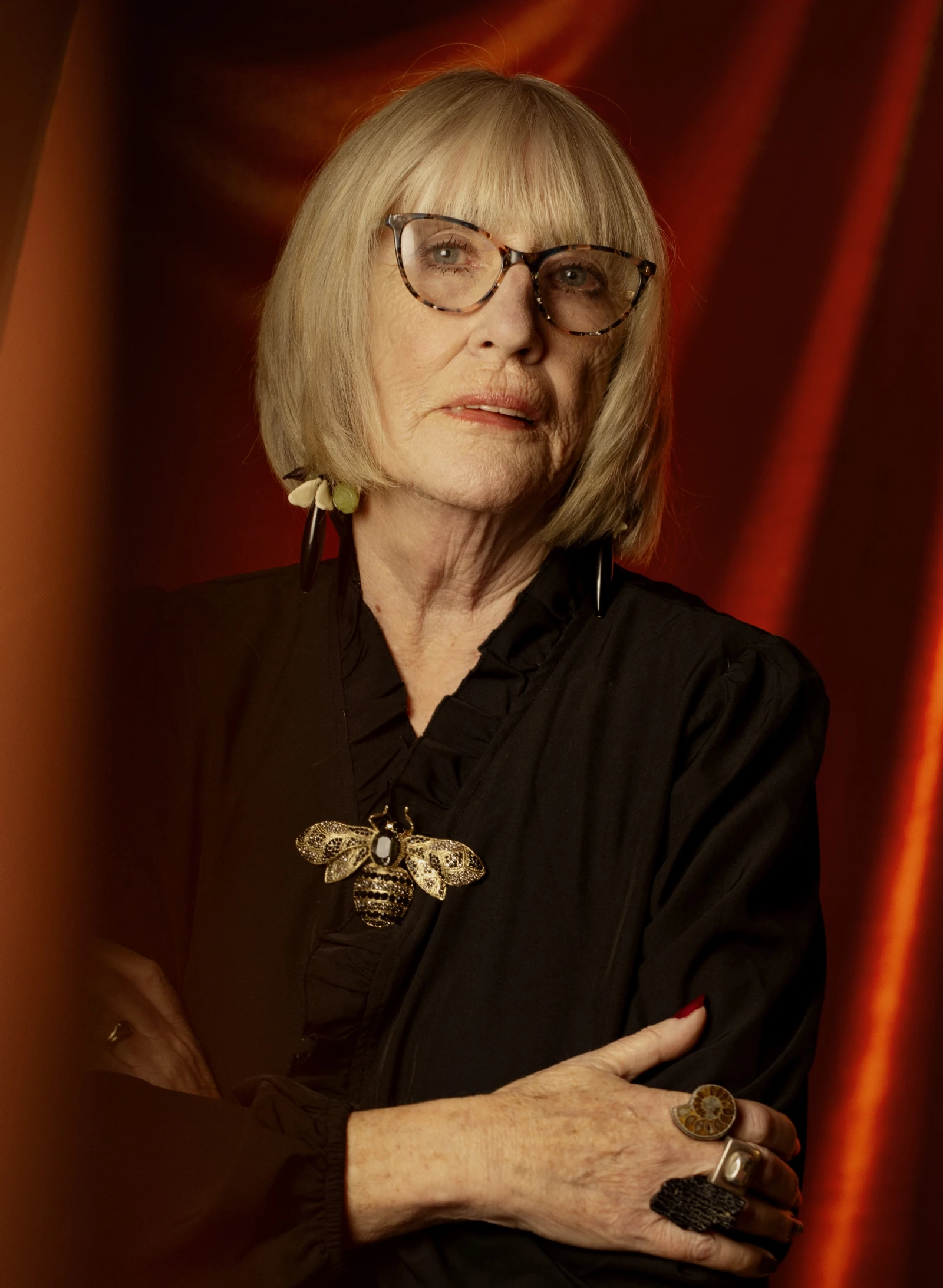
Eva Griffin is a poet and UCD graduate with an MA in Gender, Sexuality & Culture. She grew up between Kildare, Manila, and Sacramento, but currently lives in Dublin. She is a founding member of Not4U Collective, hosting events, running workshops, and publishing zines. So far, the collective has raised funds and awareness for Together for Yes, Dublin Rape Crisis Centre, and Bodywhys. They were awarded a Bright Ideas 2019 Bursary from Poetry Ireland, and have presented panels on DIY publishing in Queen’s University Belfast and University College Cork. Eva was chosen as a Dublin Book Festival Young Writer Delegate by the Irish Writers’ Centre in 2019. She has read her work extensively around Dublin, at charity events, Red Line Book Festival and as a featured poet at Books Upstairs’ Sunday Sessions. Her work has been published in Poethead, The Ogham Stone, Tales From the Forest, All the Sins, Ghost City Review, HeadStuff, Peach Magazine, Abridged and New Binary Press. Eva is currently the Poetry Editor for Queen Mob’s Teahouse.
“Although her sigh - one sigh - replayed
on the radio for days
And although you whispered under your breath
that you’d do anything to make her
Sigh - really sigh - like that, she died anyway…”
from “Frances, I love you,” Fake Hands / Real Flowers
Susanna Galbraith: How did Fake Hands / Real Flowers start?
Eva Griffin: The pamphlet didn't actually come about how I expected. I had put together shorter manuscripts before for micro-chap contests, but had assumed I didn't have enough work published by 'established' journals to be looking at something longer. Aaron (the editor of Broken Sleep Books) got in touch after I had posted a poem on Twitter in May last year. Every so often I get fed up waiting 6 months for a journal to reject my work and post a poem online just for anyone to read it! It helps me feel less like I'm writing into the abyss. So that day I had posted 'July 7th' on Twitter and it went around a bit, catching his attention on the way. When he DM'd me asking did I have a manuscript I started putting all my energy into it because I didn't want him to forget about me. Looking back I probably shouldn't have rushed like I did, but it's all a learning experience. I started going through what I had, and it was only after putting different combinations together and writing more that I saw a theme emerging.
SG: How has it been working the press, Broken Sleep Books?
EG: Something I’ve learned from this experience is that I really don’t like self-promotion. Because Broken Sleep is basically just Aaron [Kent], it’s up to the poet to push their work out. I haven’t taken to that very well because I’m not entirely sure what the desired result is, or how quickly things should be happening. Most days I send one email and then have to lie down. I think I exhausted myself from the weight of imagined pressure. I did get some invaluable advice from Alice Kinsella (who published her pamphlet Sexy Fruit with Broken Sleep in 2018) but I didn’t necessarily feel up to doing everything. It’s not a money making venture at all so the goal is simply for people to read it and have some sort of positive reaction. The launch was just me booking a room and telling people to come. Thankfully, they showed up. I’m honestly relying on other people to spread the good word of my tiny book. Maybe a few Tweets.
SG: Tell me about the title…
EG: The idea of “Fake Hands/Real Flowers” is offering up something fabricated but with genuine emotion behind it. The title came to me after seeing a statue of the Virgin Mary with a bouquet of flowers placed in her hands. The hands are marble but the flowers are alive and breathing. That quote from Greta Gerwig I use [as an epigraph to FH/RF], “none of it actually happened, but it’s all true” (she said that during a featurette on the making of Lady Bird) captures the essence of the pamphlet. There’s real emotional weight behind the poems, but I’m often writing about people I don’t know, or exaggerated occurrences. I think the idea of exaggerating or heightening emotions is interesting, because it’s something we do online all the time. I share something funny and say I’m howling or screaming but I’m sitting in front of the screen with a blank expression, maybe cracking a smile or giggling, but absolutely not howling. In poetry, I often find that I’m trying to really convince you that I’m howling, because I need to get this feeling across to you through a blank page. The illusion of Carole Landis needs to make you feel something or I’ve failed. I’m the furthest thing from a 1940s American actress, but I’m going to make you believe that I know how she loved.
SG: Your title comes from a statue of the Virgin Mary, you’ve just said. There’s also a sense of the Mary and the pietà in “Perforated”, the opening poem, and elsewhere you reference Pope Francis, prayer and rosary beads, painted ceilings and god, sacred animals, and later there’s “Arriving at church for her wedding, accompanied by Kay Francis”... What draws you to religious imagery?
EG: It’s inescapable, really. Even though I didn’t have the typical Irish religious upbringing, I still find myself going there. I think it’s at the backbone of a lot of pop culture. In a way it’s such an easy visual to go to. Funnily enough, the first line of “Perforated” comes from a tweet by Mitski in response to someone asking about new music, but as soon as I wrote down “I’ve been waiting, drew a bath” what followed was all religious. I have no idea why. Maybe the idea of bathing is so intimate and ritualistic my mind went to god.
SG: The speaking “I” seems to modulate a lot throughout Fake Hands / Real Flowers. There can be a confessional tone, but it moves between different voices, characters, historical figures… Tell me about this. Why do you think first-person dominates?
EG: I think whenever I’m writing a poem, even if it doesn’t seem like it’s about me, I’m weaving myself into it, so I can’t really get away from the first person. Sometimes when I substitute it for the third person it feels a bit off because I know on some level that I’m in there, and it loses the emotional connection. It’s something I’m trying to move away from just so that my entire portfolio isn’t a huge, unflattering photo of my face in close-up. I think I still associate the third person with some kind of distance that I’m not ready for yet.
SG: You frequently reference film in these poems… I’m thinking of “I WAKE UP SCREAMING (directors cut)”, your series of Carole Landis poems, and “In which Jane & Katie end up together (Calamity Jane 1953)”... And your poem in the forthcoming Abridged, “When summer comes my mouth will open,” is written after Ari Astor’s Midsommar. Do you consciously work in conversation with film as a medium?
EG: Writing after films is such a natural thing, I think. There’s an abundance of stimuli to work with whether it’s the script, the characters, the visuals, the soundtrack. I don’t go into every film thinking I’ll write a poem, but it does happen quite often that even a line or two will come to me while watching. Engaging with something visual is a great way to get out of writer’s block too, so often it is a conscious decision. I didn’t know when I sat down to watch Midsommar that I’d have a poem immediately afterwards, but I did intentionally binge the entire first season of Sailor Moon with the goal of writing a small zine of poetry.
SG: There are a lot of implicit screens in Fake Fands/ Real Flowers… this is there in the film references, but also in allusions to other media and the internet… Wikipedia, Google… It’s even there in historical moments like “the night Pope Francis is in Ecuador” (because we tend now, of course, to access these as their trace flows through our screens... ). Can you talk to me about your engagement with screens and the scaffolding of the internet era?
EG: It’s so morbid but for the poem “July 7th” I literally Googled the date just to see what else was going on while I was busy having a breakdown. I had written the line “the night I try to kill myself” and thought, well, what was everyone else doing? The first news story that popped up was about Pope Francis being in Ecuador and his white skullcap blowing off his head which I thought was such an incredible image to play off a suicide attempt. Forgive me but what popped into my head right now is that Katy Perry lyric “do you ever feel like a plastic bag” but it’s the skullcap. Do you ever feel like a papal cap blowing through the wind, wanting to start again?... (I just Googled it and it’s actually called a ‘zucchetto’.) That’s the thing with writing now. I can Google whatever and suddenly find myself in a poem. I wrote a poem about a Japanese hornet simply because I read a reference to one and wanted to know more. To put that in a negative light, it can feel like nothing is organically my own idea. I’m flitting around the internet scrolling through scraps and making poems out of them instead of just sitting in nature, seeing the hornet, and writing the poem. I catch myself sometimes with 35 tabs open and I can’t remember why I Googled ‘sagitta’ but I’m on the Wikipedia page now and someday soon you’ll have a poem called “Sagitta”.
SG: Amazing, I can’t wait. It’s so great to see explicit acknowledgements of that very real and very strange way we gather and journey through knowledge now embedded into poems. “When you type Ganymede into Google, it asks” is one of my favourites... So, what role do you think poetry can play in this world, in contemporary discourse that’s contextualised by social media and search engine culture?
EG: I love the idea of found poetry - taking something already in existence but formatting and presenting it as a poem - and I think the internet is ripe for it. Whether it’s a series of Tweets, or typing a phrase into Google and letting it do the rest. That’s what I did for that poem, the very aptly titled “When you type Ganymede into Google”. If you scroll down and keep clicking on the different auto-fill questions, it leads you down all these other paths of inquiry, and suddenly you’re very far away from Ganymede, from the original question. It made me think about how we’re all in the process of getting lost in the black hole of the internet. I used a lot of different early social media when I was a kid that I can’t access now, so that entire backlog of myself is gone. They say once you put something online it’s there forever, but the more we add the harder it is to find certain places, I think. So poetry as recovery, as capturing the moment, is of huge relevance to the digital age, as everything is in danger of falling to the bottom of the pile.
SG: Mental health seems to be a persistent concern throughout FH/RF, and you return to the idea of suicide a number of times. Do you think poetry has a therapeutic role to play, for writers or readers? Is there anything else at play here?
EG: I think there’s a bit of a slippery slope when it comes to writing about mental health. As poetry editor for Queen Mob’s [Teahouse], I’ve received a few submissions that read more like cries for help than anything else. I’m not sure what to do about that really, but it’s something I’ve noticed. I’m conscious of it being a cathartic process for the writer, but in my own writing I never want a poem to feel completely insular or so wrapped up in my own experience. I took a module in college on the body in pain in Irish literature, and we had a discussion one day about how we, as burgeoning academics, shouldn’t be approaching the text in search of catharsis, but I think that the therapeutic moment often catches you off guard. It’s not for the writer to say what healing a reader might get from the work. I do think the issues are important and prevalent enough to warrant writing about, especially if it’s something you’ve had direct experience with.
For me, suicide has been such a constant shadow in my life. When I was in third year of secondary school, our community was hit with cluster suicides. They were all young girls. To be around that at 15, and to be struggling with your own issues, was a terrible thing, but it also caused this strange fascination with suicide because I couldn’t comprehend what was happening. Rumours went around that playing with ouija boards were causing the deaths, so it became this supernatural spectre of a thing that I guess is weirdly still haunting my work.
SG: The intensity of imagery within first-person narration, and the sometimes leaping narratorial and sensational transitions, can make your poems feel like dreams … Do dreams or dream logic influence you?
EG: There’s this disorder called maladaptive daydreaming that isn’t officially recognised as a psychiatric condition, but it’s the idea of excessive fantasising, of daydreaming to the point that you could spend half a day living in an alternate universe in your head. The fantasies are extremely vivid and story-like, with plot-lines continuing for long stretches of time. It’s often triggered by music or boredom, but it results from this overwhelming need to escape reality. Now, I don’t want to self-diagnose myself, but this was something I struggled with through my teens and I catch myself still doing it now. Everyone daydreams, obviously, but when you daydream to the point that you’re not engaging with real life tasks and you’re losing track of real time… it’s a bit of a problem. I think, since we’ve been talking a lot about using the first person even in more character pieces, that this is linked to how I write. I notice that I do it less when I’m writing, because the poem becomes the fantasy for a while. Being that different “I” in a poem is absolutely a form of daydreaming. (Replacing human interaction with poetry is healthier, right?)
SG: You jump from one intense image to another, and often let narrative stay inexplicit… Do you value ambiguity in poetry?
EG: Absolutely. Strict narrative doesn’t come naturally to me, and whenever I’ve tried to work on it (hello to my few short story scraps), the result feels laboured. I’m not drawn to overly narrative poetry when I’m reading either. I tend to jump from ideas quite quickly. I find it hard to settle down with something. The Carole Landis poems were a surprise in that I hadn’t managed to stay with one figure for very long before. If I was really going to psychoanalyse myself, I’d say that my attraction to ambiguity is due to my overall reluctance to face things head on. I also love that intense pang in your chest when you feel something but don’t know what it is. I think writing ambiguously can create this overwhelming sense of yearning, which is something I feel daily and gravitate towards when I’m reading poetry. Yearning is the greatest feeling. It’s so painful. And I think the best way to convey it is by yanking someone from image to image and not saying everything you want to say (or would say after a few drinks). It’s like getting a glimpse of something and not being allowed to look back.
SG: Tell me about how you work with form...
EG: I’m not sure if I should admit this as a poet, but I did see a very funny Tweet from Luke Kennard about going through prose poems and just pressing enter at random, so I feel validated. Most of the time I just feel it out. I don’t tend to go at a poem with a form in mind. I usually play around with it until it looks and feels right. It makes me feel like a bad poet so I’m trying to be more formal. I did write a contrapuntal recently and texted my boyfriend to tell him I’d written an amazing poem simply because I had used some semblance of form intentionally.
SG: You have an MA in gender, sexuality and culture. Did this have an impact on your poetry?
EG: The MA actually introduced me to a lot of poets that have greatly influenced my writing and reading habits: Danez Smith, Ocean Vuong, Rickey Laurentiis, Eileen Myles. So in that sense, it shaped my taste. I think overall the MA made me a better person, just from what I was being exposed to and what I was being asked to think about. The idea of navigating culture through expressions of gender and sexuality has absolutely followed me into my work. A lot of my poems attempt to parse out female desire in different settings, whether in a film, in a paparazzi photo, in a Greek tragedy. It’s what I find most interesting.
SG: Who are your influences in terms of other writers? You’ve mentioned a few there…
EG: Doireann Ní Ghríofa, Jessica Traynor, Julie Morrissy, Cyril Wong, Paige Lewis, Emily Berry, Grace Wells… One of my favourite short collections I’ve read to date is ‘Is My Body a Myth’ by Heng Siok Tian. My mum picked it up for me at the Singapore Writers Festival a few years ago and it’s something I go back to again and again.
SG: What influences you beyond other poets? We’ve already talked about film…
EG: I talked about this in another interview recently: I honestly thought I was destined to be a pop star when I was a kid so I started writing song lyrics. I was a very precocious 7 year old who idolised Britney Spears, obviously. That said, I think listening to music is what gave me my appreciation for language. I wasn’t a huge reader when I was younger - that title goes to my older brother and he definitely still reads more than me (he’s a playwright, there’s more words in plays I guess). While I’m still a giant pop music nerd simply for the hooks, there are a lot of songwriters I look up to and wish I could emulate in poetry. One of my first published poems was written after “Losing Dogs” by Mitski (a girl can dream, okay). Other lyricists I hate because I wish I was them: Caroline Polachek, Cacie Dalager, Michelle Zauner, Amber Bain, Moses Sumney, Sharon Van Etten, Adrianne Lenker, Sufjan Stevens (could you imagine).
SG: Do you have a favourite poem in the pamphlet?
EG: I would say either “Frances, I love you,” one of the Carole Landis poems, or “Soko sucking on Kristen’s fingers, 2016”. I really enjoyed treating a paparazzi photo of Kristen Stewart as fine art.
SG: Are there any poems that you have found to be particularly popular at readings, that others have latched onto?
EG: People mention “Frances, I love you” a lot. That poem is so intense to me because I was holed up in a house on Downhill Beach in February last year, and it was cold so I stayed in bed a lot, falling down various internet holes, and there she was. Carole. I fell so deep, and that poem was the first one I wrote about her. It’s this outpouring of everything I had learned about her and navigating this weird connection I felt simply from scrolling. I think people connect to that one because of those inexplicable connections we form all the time. That love that isn’t really love because how could it be?
SG: What’s the relationship between the page and reading aloud for you?
EG: Honestly, I started doing open mics just to get myself and my work out there because I hadn’t been published yet. Now that I have work out there, I think doing readings is a great way for people to get a better sense of the poem and how it lives in my head. It’s nice to share that vision with an audience, to really reach those heightened emotions together. It’s something I’d love to experiment with more. I certainly wouldn’t call myself a performer at this stage. We had Ciara Ní É at a recent Not4U event and her ability to command a room is incredible. That’s a skill I want, but it’s only going to come with practice.
SG: Are you working on anything now?
EG: I’ve had a project sitting around for about two years now that I go back to every few months called one last spin around the sun. It’s a series of poems about a character denoted by X who is navigating an ending world. It’s a strange one in that I’ve let myself really tap into the uncomfortable thoughts that pop into my head. I’ve been trying to put them into this work without overthinking it, but at the same time funnelling everything through this character. I’m thinking about the tendency towards complete apathy when faced with mass extinction. Equally, how the knowledge of impending death makes you lose your mind a little bit, even when you’re trying to ignore it. It started when I was listening to people’s conversations in the queue at a McDonald’s, so that’s a pretty good indicator of the tone.
Eva Griffin’s debut pamphlet Fake Hands / Real Flowers is now available from Broken Sleep Books. The poems “eating girls backwards, “Soko sucking on Kristen’s fingers, 2016” and “a little lighter” from FH/RF can be read on berfois.com

Susanna Galbraith (she/her) is from Belfast. She is a Poetry Ireland Introductions 2023 selectee. Her recent poems have appeared in New England Review, Berlin Lit, Propel Magazine and others. Her first pamphlet is forthcoming with Nine Pens Press, 2024. She is also an editor of Abridged
Follow her on Twitter @susannaalice
More work by Susanna Galbraith


Tel: 028 7126 6946
Email: hueditor@theverbal.co
Verbal, Stable Lane and Mall Wall, Bishop Street Within, Derry/Londonderry, BT48 6PU
 company
Copyright © 2026 Honest Ulsterman