


Review & Interview
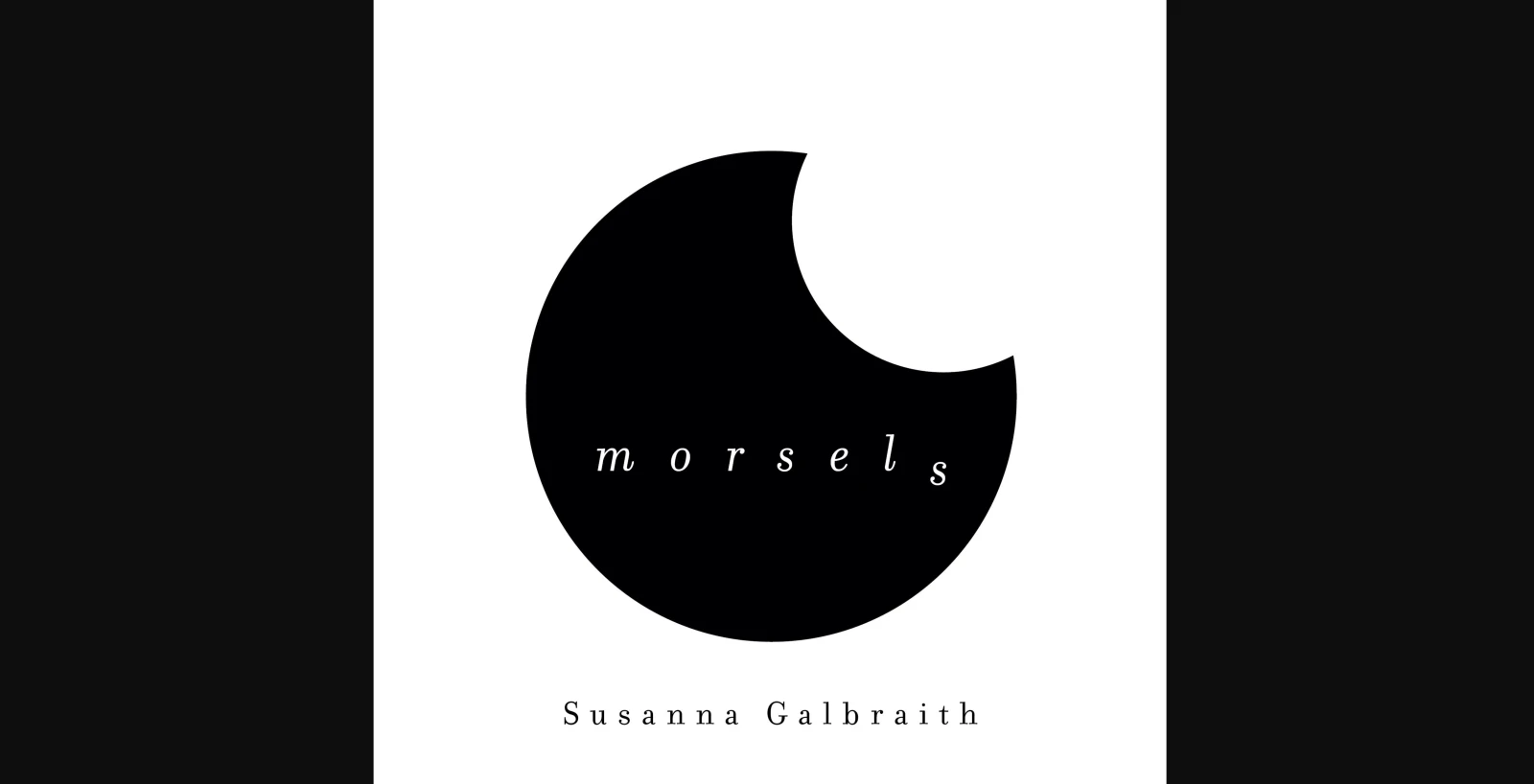
Susanna Galbraith’s debut poetry collection, morsels, marks a stunning full-length debut, demonstrating innovative experimentations with form and content. Galbraith wrote in her feature article ‘On Littleness and Value’ for the Honest Ulsterman in February 2026, that she’d once received advice from a friend not to use the word ‘little’ in her poems as though the term marked a dilution in the value of what was being articulated, often being imbued with connotations of being ‘non-committal, girly, excessive, weak.’ Yet the title ‘morsels’ encapsulates the power in these pages to relate so much in small fragments. The speaker in the opening sequence ‘bears’ points to this, stating ‘I broke silence into crumbs’, morsels of meaning to guide readers through a forest of language:
your
words
had
started
to
resemble
the
woods
(p.18)
‘bears’ is prefaced with an epigraph from the tale ‘Tam Lin’, foreshadowing a Red Riding Hood-style fall into the world of the collection, where ideas and words shapeshift and metamorphose to alter meaning: ‘And then I’ll change all in your arms/Into a wild bear/But hold me tight and fear me not’ (p.7). The opening sequence then proceeds to repeat itself, with select words morphing and changing, erasure foregrounding the relevant morsels to guide us as the poem continually repeats, at once familiar and different across pages. It is the awareness of the reader and their role in producing meaning that is one of the highlights of Galbraith’s work: ‘you’ll see everything if/you pay enough attention’ (p.22). In an interview with Zoë Brigley in Poetry Wales, Galbraith foregrounded her awareness of the reader as a ‘collaborator in the writing of the poem’ and that our role is to ‘participate in how things relate’. Certainly, ‘bears’ exudes this philosophy, with the reader left to follow the bold text (crumbs) to guide them through the poem, whilst also being invited to stray from the path to see what is hidden in the faded text forming the woods in the background.
Metamorphosis is a thread woven throughout the collection, with Galbraith’s structuralist poetics marking the slippery nature of language and words in attempts to solidify meaning. For example, the motif of birds continually shapeshifts across poems, particularly in the section, ‘something the birds mean’ where Galbraith reflects on her relationship with her mother. At one point the birds mark ‘forgiveness’ (p.39), at another ‘thoughts lost from my coffee cup’ (p.45), only to resolve in the raw honesty of:
I wasn’t sure if this was an
abstraction, meaning bird was in the end
what I was really trying to say
[…]
or if this was simply me throwing open
the windows of what I believed and letting
go of any small thing that might fly away’
(p.46).
morsels is daring in its acknowledgement of the difficultly in stabilising meaning, in its willingness to offer no easy answers or fairy tale didacticism, but instead to raise new ideas and questions. For instance, in the final section, ‘as though an island’, the speaker on their travels notes how questions ‘stretched out like a desert’ and ‘We climbed/the stairs to another part of the air/and learned nothing’ (p.70, 75). There is a darkness woven into the fabric of the collection as it captures the difficulty of finding something tangible and concrete to hold onto. In the final section there is also a marked futility that we might say is indicative of our times; with injustice everywhere, it is impossible to make sense of what is happening, and we can feel in this section an acute sense of futility. At one point, for example, a young boy is spotted by the speaker ‘leashed to a streetlight’ and from inside a warehouse we hear ‘a single sheep bleating’, yet the speaker reflects only that ‘We waited, like there was something we would do – /then we left’ (p.76).
Finally, Galbraith deconstructs the man-made divides created between humans/animals/nature. In the ‘as though an island’ sequence, our ‘blood just tastes like the sea’, we meet ‘a dog who shared my name’ but ‘We didn’t have to feed her/because we hadn’t named her’, and we learn that ‘Small goats had fallen/as though from the sky, like rotten fruit’ (p.79, 53, 93). These references are just a few of the images that force us to consider our relationship to the natural world and our treatment of it. There is a sense of excess, coldness, a lack of care, ‘everything you found on the sand/you squeezed like a coin’ (p.74). This section pains us to reflect and take responsibility, but without being moralistic or offering judgement. The observations are made and silence is given its place for us to reflect on what we witness as readers: ‘sounds sat on top of everything/like empty packets’ (p.70).
Galbraith’s morsels is ambitious, innovative and daring, offering a fresh new voice and perspective. The book is one that rewards return visits and I’ve found myself gleaning more from its pages each time I delve back into its world. It is a collection with the reader at the forefront of the poet’s mind and leaves you with a fulfilling, if moving, sense of having found more questions to ponder rather than lessons learned. It is fitting then, that in the closing lines, we are transported right back to the beginning of the collection with a return to self-conscious fable, offering little in the way of fairy-tale resolution:
You peeked around the wall at me
like the wolf of my dreams.
I hid you in my arms and waited
for a wave to break.
(p.104)
___________________________________________________________________________
INTERVIEW:
Kendra Reynolds: I was really drawn to the title. In an essay you once wrote for the
HU, ‘On Littleness and Value’, you mentioned that often the word ‘little’ appeared in
your poetry and you had a strong affection for it, despite a friend expressing
sentiments akin to the word diluting the value of the poems, little often associated
with being ‘non-committal, girly, excessive, childish, weak’. I was wondering if
there’s something in the title Morsels that relates back to the notion of reclaiming
littleness and the power of poetry to capture vast meaning in small fragments? Can
you tell me why you chose the title for your collection and how it relates to your
poetic practice?
Susanna Galbraith: Undoubtedly, I think… I haven’t yet escaped my infatuation with littleness (nor do I
care/expect to any time soon). It took a bit of time for ‘morsels’ to emerge as the title for this
book as the editing phase progressed. Initially, ‘morsels’ was just a stand-in word I was using
to describe the miniature poems that make up the long poem/sequence that is now called ‘as
though an island’ – each poem was a ‘morsel’. I wasn’t sure if this was a title or a sort of
playful, childish name for a ‘form’ I had developed a certain loyalty to. (They are actually
very formally didactic fragments – constraints). It’s a sensationalist word, I suppose, from the
world of childhood. It’s not just smallness, and fragmentation (different, equally important),
but the idea of the mouth and what moves through it, transforming, breaking down and
coming together. Words, food. Much of my writing is dependent on the fragment form, for
many reasons I think (some of which I’m probably unaware of). Images are sort of everything
to me - fragmentation allows me to let the images constellate, and (hopefully) there’s ample
room for both the reader and a range of uncertain meanings in the fissures between the
fragments…
KR: When reading Morsels, there’s a satisfying sense of reader involvement throughout
and the reader’s role in the meaning-making process. For example, the bolding of
words and phrases in ‘bears’ feels like a scattering of breadcrumbs that guides readers
to find their own paths to meaning. And for me, it felt at times like a conversation
between the speaker of the poems and the reader – ‘you’ll see everything if/you pay
enough attention.’ Can you talk a bit more about your experimentations with poetic
form in the collection?
SG: I find it satisfying to hear that you felt this as a conversation between the speaker and the
reader, because that’s what I’d hope it would be. That’s all it ever is, I suppose, but also I do
lean into trying to facilitate that semiotic roominess, or that necessity for the reader to
actively connect one thing to another, using themselves (because what else). In some ways
what these poems are made of is exceptionally personal, and I want there to be a bit of an
aura of that. But at the same time, tiny bites of the personal, made strange, displaced into the
swell of the poetics… they become like lost, broken things, for a reader to pick up. That would
be the ideal anyway – I don’t know if that happens.
It’s interesting that you link this to form… it’s syntactical, but I suppose it is formal too, and
those are so entangled anyway. The white of the page (or the possibility of that space, which
every venture into poetry carries the possibility of) is space for the reader, I like to think. It’s
another layer of the writing that draws attention to the ‘thingness’ of language, as something
that can be a conduit or a barrier, or both. Usually both. I’m interested in how meaning
accumulates across fragments and small poems, or moments in a sequence. That involves the
reader in a prolonged way, I suppose, in that it involves the grasping and holding of their
memory as they move through the text, and the slipperiness and biases of memory, which
echo those of language itself.
I’m (perhaps entirely falsely) inclined to think about any poem as a conversation with the
reader. That poetry can permit an undefined second person (the ‘you’) accommodates that
constant, weird doubleness. That ‘you’ can flicker between a range of absent addressees and
the reader themself, I suppose in a similar way to how when you look at a word in a poem
you might flicker between seeing through it, to signification, and looking right at it – paying
attention to it – as an object with its own history and sensory bulk, and its own limitations
and potential to fail. (This is especially potent when you’re looking at translated texts I
think).
I’m straying from form… A lot of ‘morsels’ is tightly formally constrained, although I don’t
think that that is particularly obvious. ‘as though an island’, for example, is made up of
fourteen syllable couplets, drawing on a few different formal traditions. First this was a
generative thing for me, that I used to combat a feeling of not being able to write anything.
But then the constraint seemed to effectively ‘hold’ the slipperiness of the images. I like
underlying patterns, especially those you can’t see but know you probably feel in your bones.
‘bears’ is another kettle of fish, but equally constrained as an experiment. If it draws on
anything I suppose it is folklore and the way structuralist theorists analysed the patterns in
folk, myth and popular stories. It’s the same poem thirteen times, but the nouns move around,
change, and the line-breaks move too, the text retreats into grey, and so the meaning bends
and fragments…
That’s a real ramble, sorry. You asked a rich question. There’s a lot more to say, but I’m going
to stop there.
KR: Your collection appears to draw on the influence of fairy tales, fables and myth. I was
struck by how the collection breaks open the didacticism of fairy tales (there is no
happily ever after closure here or a moral to be neatly unwrapped and digested by the
reader). Can you talk about the influences of fairy tales and myth in your writing of
Morsels?
SG: I suppose those influences are many. That ‘didacticism’ of the fairy tale is usually sort of a
coda or insurance-afterthought, one way of closing down their many-pathed strangeness into
something neater. Fairytales, and myths – it’s all the same, at the bottom of things –
communicate in simple language, ‘big’ nouns, familiar tropes, but to endlessly complex ends.
And they keep shifting as they’re passed along, becoming a sort of fluttering textual entity,
rather than something fixed, authored. It can make them quite threatening, how much of
shared emotion and uncertainty they carry, but never stabilise, in a way, but also essential.
It’s hard to fight them.
I like using simple language – big, childhood language – to try and navigate something
impossibly complex. And I have always been quite interested in patterns, especially those we
hardly know are there. Then there is the element of transformation on a journey… is it
redemptive and restorative, or a threat? What does transformation have to do with the
boundary between one person and another, leaving and returning? Where is a person within
those processes?
KR: Both humanity’s connection to, and exploitation of, the natural environment is
powerfully explored in the collection. I was really moved by the ‘kicked-in skulls of
oranges’ and the trees threatened by half-built suburbs that ‘bubbled/their
wordlessness all over the road.’ Can you talk about your examination of the
relationships between humans, animals and nature in Morsels?
SG: This is an interesting one. Ecological concern has frequently been picked up as a
significant ‘theme’ (‘question?’) at work in the book, and now I have stepped away from the
writing I can see it is very evident. But - how to explain this without sounding a bit daft… – I
didn’t ‘set out’ to write ‘about’ the environment or climate concern. I guess it’s innate, or it’s
the inevitable subconscious of the poems I was writing. Or else it’s the conscious and I was
writing from the subconscious… I’ll not get too entangled in this.
KR: Morsels is your first full-length collection, and what a wonderful debut! What would
your advice be to new and emerging poets who are wanting to publish their work and
build their writing profile in Northern Ireland?
SG: I’m not sure I’m in a position to provide any useful advice here! I have had a very
hot-cold relationship with publishing in journals over about ten years and wouldn’t
consider myself to have much of a profile. I have mostly been editing, amongst other
things, on the edges of the literary scene I suppose. I was in a period of not thinking
about submitting anything anywhere when Macha got in touch asking to see some
work. The book emerged from there, into and out of that frame of invitation.
(Sometimes you need a bracket to see clearly, I guess…). I had been about to publish
a pamphlet but that plan had gone to the weeds a bit for a number of reasons –
nobody’s fault, these things can just be precarious. So with Macha I decided to leave
that pamphlet work entirely to the side, and ended up finding there was the makings of
another book waiting in the margins of my notebooks. The Macha team’s generosity
and encouragement was immense and fundamental, so I was just very lucky there.
If I was to risk giving any advice it might be somewhere in the realm of don’t panic,
don’t rush, put your interest in what you’re writing first, engage with publishers that
excite you and seem to understand what you’re trying to do, don’t be afraid to go
quiet for a while when you need to. It’s a rich and various world, when it’s allowed to
be. (Also embrace but don’t be bulldozed by feedback - it is a powerful illuminator,
used with care.)
KR: Readers of Morsels will be eagerly awaiting your future work! Are you working on
any new projects at the moment?
SG: I’m (hopefully) going to publish a pamphlet work soon with Nine Pens Press. This
was planned for a couple of years ago but for a number of reasons it just didn’t
happen, but it will be interesting to see that slightly earlier work quietly out in the
world now. It’s a bit of a road movie I suppose… (Any fabled eagerness is much
appreciated).
Morsels is available now from Macha Press www.machapress.com
Read more work from Susanna here: Honest Ulsterman authors

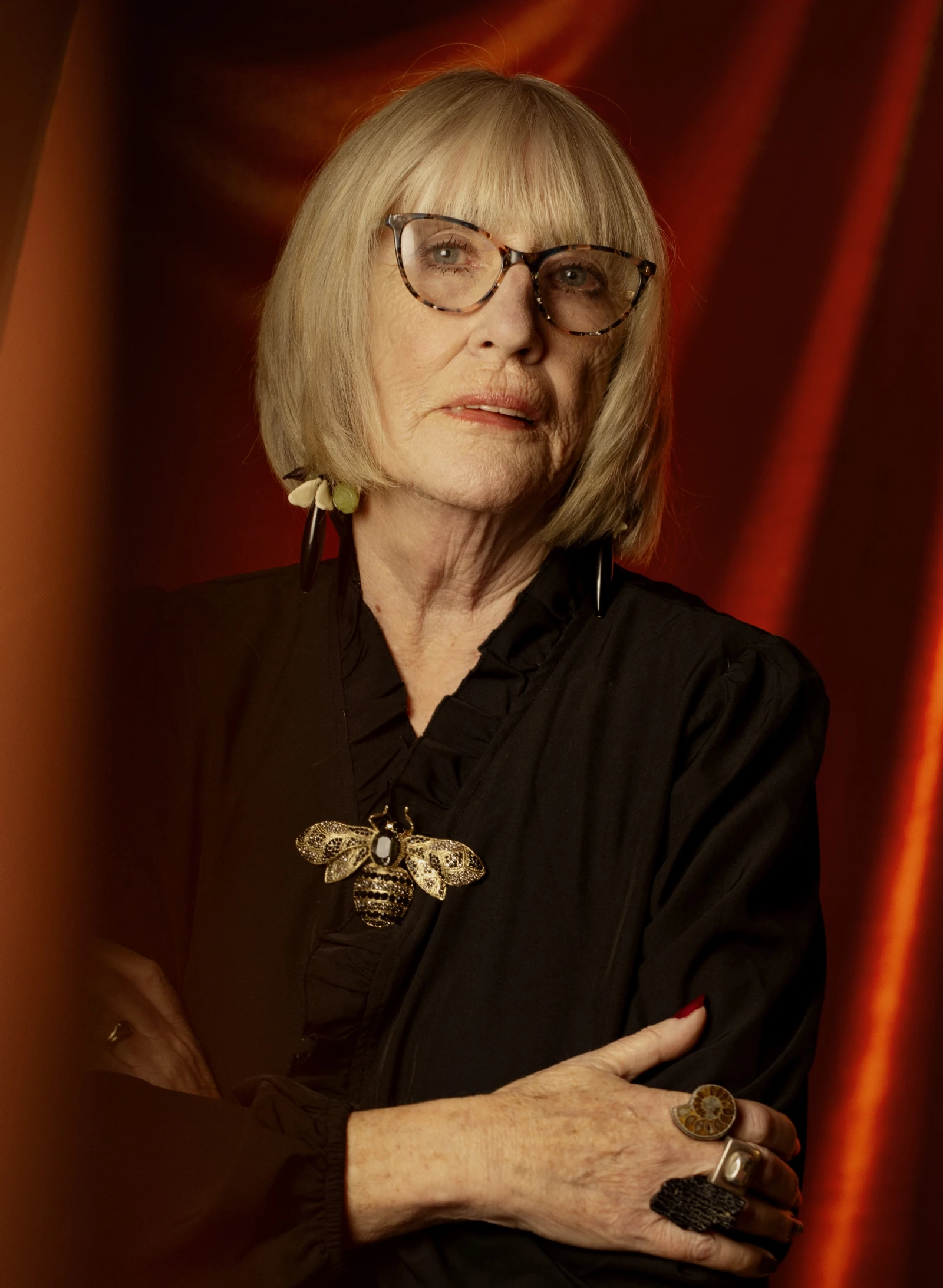
Kendra Reynolds is an international academic, award-winning poet, and former Fulbright Scholar with a passion for creative writing and contemporary literature. Kendra received her PhD in literature from Ulster University in 2018, with her research focusing on anti-tales, radical revisions of fairy tale narratives by feminist writers. She has published widely on various literary subjects including ecofeminism, social justice literature, and resilience narratives. Her first monograph, The Feminist Architecture of Postmodern Anti-Tales: Space, Time and Bodies, was published by Routledge in 2020. Kendra’s poetry has been published in various anthologies and journals, including Abridged, Honest Ulsterman, The Bangor Literary Journal, and North Star: An Anthology of Literature by Northern Irish Women. She was the 2025 winner of the 11th Annual Bangor Poetry Competition and is passionate about the wider relevance of the arts and humanities in our society, promoting the important role of the arts in fostering greater understanding of socio-political contexts, critical thinking, and as a catalyst for pursuing meaningful social change.
More work by Kendra Reynolds


Tel: 028 7126 6946
Email: hueditor@theverbal.co
Verbal, Stable Lane and Mall Wall, Bishop Street Within, Derry/Londonderry, BT48 6PU
 company
Copyright © 2026 Honest Ulsterman